
Introduction
The music industry has undergone a massive transformation over the last decade. Gone are the days when artists needed major record labels to distribute their music to a global audience. With the rise of digital streaming platforms and independent distribution services, musicians now have more control over their careers than ever before.
In this blog, we’ll explore how independent artists are revolutionizing music distribution, the role of technology, and what the future holds for the industry.
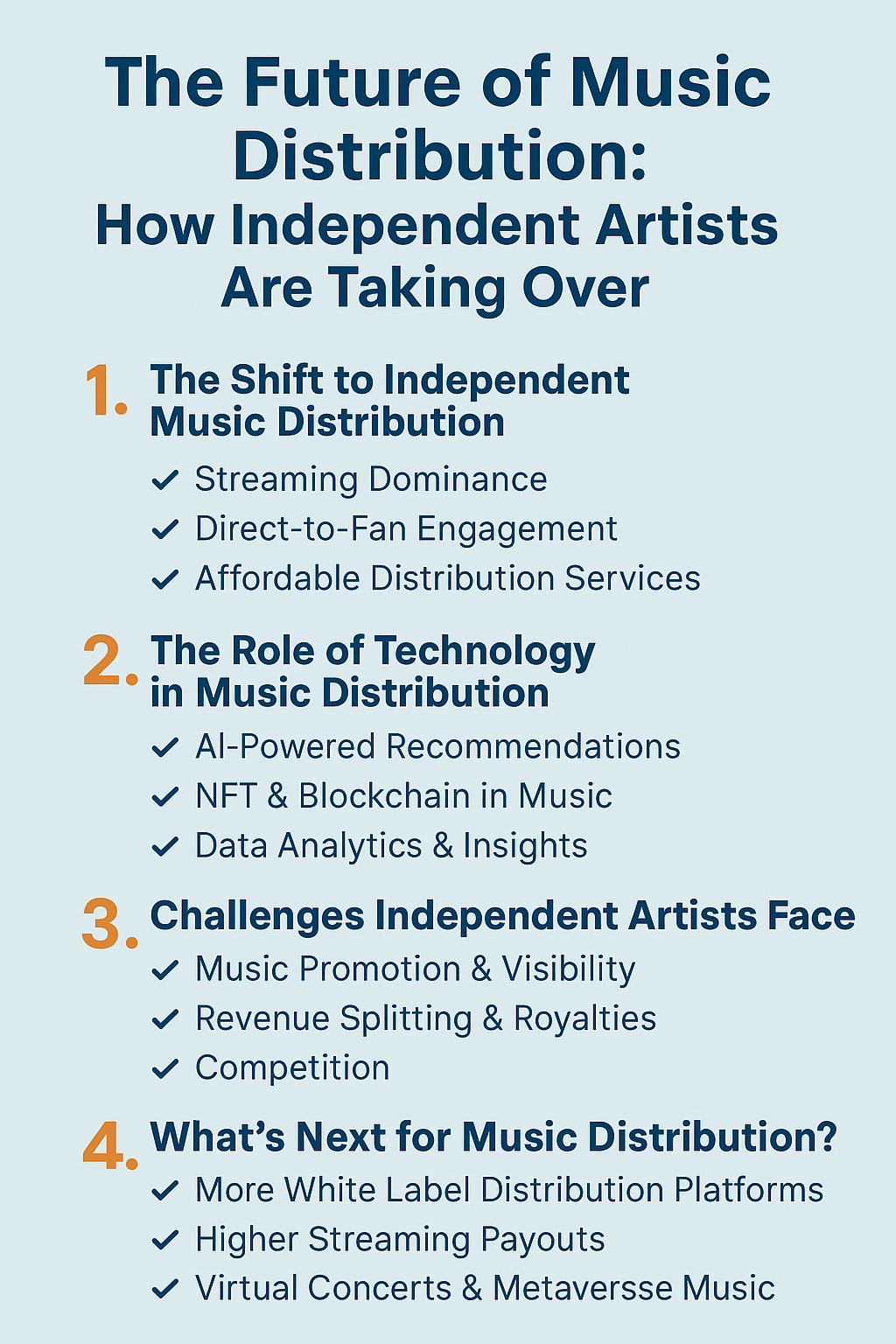
1. The Shift to Independent Music Distribution
A few years ago, landing a record deal was the only way for an artist to gain exposure. However, today’s landscape is different. Platforms like Spotify, Apple Music, YouTube Music, and SoundCloud allow independent musicians to distribute their music without a middleman.
Key Factors Driving This Change:
- Streaming Dominance – With over 524 million Spotify users and billions on YouTube, digital streaming is the new norm.
- Direct-to-Fan Engagement – Social media platforms help artists market their music without needing traditional label promotion.
- Affordable Distribution Services – Companies like Distro+, TuneCore, and CD Baby allow artists to distribute their music worldwide for a small fee.
This means that artists today can earn revenue, build a fanbase, and maintain full creative control over their music.
2. The Role of Technology in Music Distribution
Technology has democratized the music industry. Here’s how:
A. AI-Powered Recommendations
Streaming platforms use AI algorithms to recommend songs based on user preferences. This helps independent artists reach new audiences without relying on major marketing budgets.
B. NFT & Blockchain in Music
Blockchain technology is changing how artists sell and monetize their music. NFTs (Non-Fungible Tokens) allow musicians to sell exclusive music content, providing fans with ownership of digital assets.
C. Data Analytics & Insights
Platforms like Spotify for Artists and YouTube Analytics give musicians real-time data on their streams, listener demographics, and earnings, helping them make strategic marketing decisions.
3. Challenges Independent Artists Face
While independent distribution offers many advantages, it’s not without challenges:
- Music Promotion & Visibility – Without a label’s support, artists must invest in marketing to stand out.
- Revenue Splitting & Royalties – Understanding streaming payouts and royalty splits can be complicated.
- Competition – With millions of songs released daily, breaking through the noise requires consistency and creativity.
Despite these challenges, independent artists now have the tools and opportunities to build sustainable music careers.
4. What’s Next for Music Distribution?
The future of music distribution is heading toward more artist empowerment and decentralization. Here’s what we can expect:
✅ More White Label Distribution Platforms – Companies like Distro+ allow labels and distributors to create their own custom music distribution services.
✅ Higher Streaming Payouts – As more artists push for fairer revenue splits, platforms may increase streaming royalties.
✅ Virtual Concerts & Metaverse Music – Digital performances in virtual worlds will become mainstream.
✅ Smart Contracts for Royalties – Blockchain-based smart contracts will automate royalty payments for artists.
The future looks bright for independent musicians, and the power is now in their hands.
Final Thoughts
Music distribution has evolved into a creator-driven industry, where artists can self-release, promote, and monetize their music globally. Whether you’re an independent musician, a record label, or a music entrepreneur, the key to success lies in leveraging technology, understanding streaming strategies, and staying ahead of industry trends.
💡 Are you ready to take control of your music distribution? Join platforms like Distro+ and start distributing your music worldwide today!
Leave a Reply